Five days after the 9/11 attacks, 60 Minutes correspondent Ed Bradley came to Summit and found a town that was still waiting. Commuters who took the Midtown Direct every morning had not come home, and their families were still calling hospitals. Summit was a small town where about 1 in 7 adults worked in financial services in Manhattan, which meant the attacks on Lower Manhattan landed here with a force that few New Jersey communities felt as directly.
Twenty-five years later, 60 Minutes correspondent Lesley Stahl returned to Summit to revisit her late colleague’s reporting in a town that lost nine residents in the attacks.
Partner Matthew Baione of Pitta & Baione LLP watched the Stahl segment in the living room of his own home, located a few blocks from the Summit train station where those families waited for their loved ones on 9/11.
“Watching the 60 Minutes piece was strange, because I know these streets. I walk past that train station all the time. What struck me was how much of the story is still unfinished – not the grief, which this town has handled stoically and with enormous grace, but the part nobody was thinking about in 2001, which is what the air did to the people from the Summit community and elsewhere who went back to work in lower Manhattan.” – Matthew Baione
What the Town Went Through
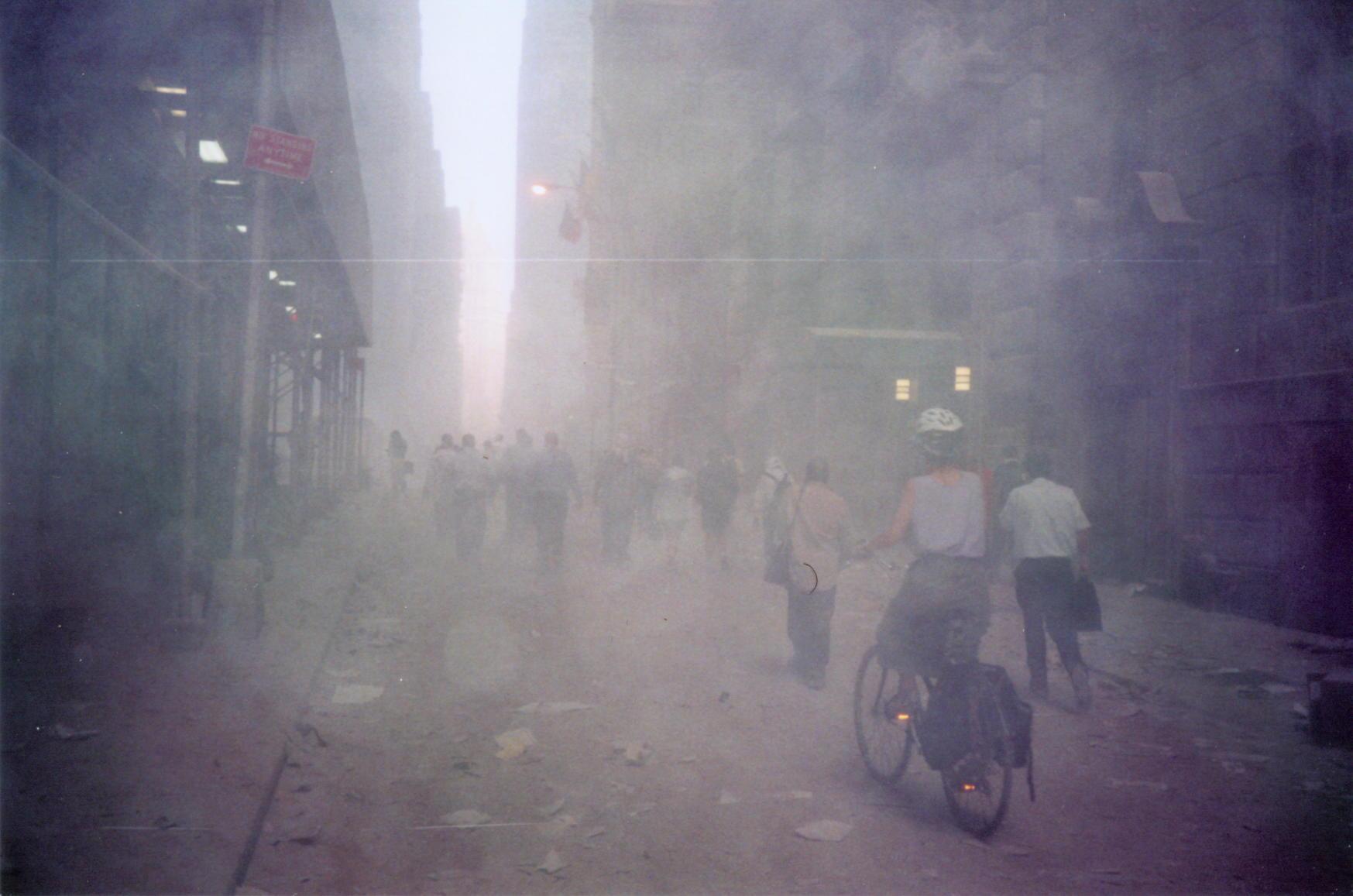
Rev. Charles Rush, a Senior Minister at Christ Church in Summit, New Jersey, waited with his parishioners at the Summit train station in the days after the attacks. He described to 60 Minutes the shock of watching commuters step off the trains covered head to toe in pale gray dust. “Everybody who got off the train was white. They were covered in dust.” He also described what came after: neighbors organizing meals, watching each other’s children, and filling the gaps that grief leaves in a family’s daily routine.
The community’s response was not unique to Summit, but the situation there was particularly intense. Union County, as a whole, lost 60 of its residents in the attacks. The county’s 9/11 memorial at Echo Lake Park in Mountainside, completed in 2003, was designed with input from residents of Summit and nine other New Jersey municipalities.
Summit continues to hold its own observance, with a bell ringing ceremony, every September 11 at fire headquarters on Broad Street.
Statewide, nearly 750 New Jersey residents were killed on September 11.
The Part of the Story that Is Still Being Written
Summit residents did not stop commuting in the aftermath of the attacks. Within weeks, residents were back on the Midtown Direct, dutifully back to work in office buildings in Lower Manhattan that had been physically damaged. These buildings were still being actively cleaned. They were also located in a neighborhood where 9/11 toxic dust was being kicked up off the streets every time a truck went by. Federal EPA officials assured everyone that it was safe to return to work and to live, and that the acrid-smelling air was safe to breathe. Unfortunately, it wasn’t.
The dust from the fallen Twin Towers that settled over Lower Manhattan contained asbestos, lead, pulverized glass, PCBs, and gypsum. People who returned to live, work, and attend or teach school in that area in the months that followed have since developed cancers and respiratory illnesses at shockingly high rates. This includes people who were never involved in, or anywhere near, a rescue or recovery effort. They are people who simply went back to their desks, their homes, their schools, and who made a living working every day at businesses located in the area.
“The misconception I run into constantly is that these 9/11 compensation and health programs are just for firefighters and cops, and other first responders. They are not. If you were a bond trader who went back to your office on Water Street in November of 2001, then you were breathing in that toxic air, and a potential 9/11 victim.” – Matthew Baione
Those adults and children who lived, worked, or were schooled in the lower Manhattan area back in 2001, are now in their 40s, 50s, 60s, and 70s – the age groups when 9/11 medical conditions tend to appear more often.
Federal Programs that Were Established to Help 9/11 Survivors
The Zadroga Act created two separate programs to help survivors of the 9/11 attacks:
- The World Trade Center Health Program (WTCHP) provides free medical screening, monitoring, and treatment for certified 9/11-related conditions. It has no enrollment deadline, is authorized by federal law through 2090, and is funded through 2040, following the Consolidated Appropriations Act of 2026. For survivors, the eligibility area is Manhattan south of Houston Street, plus any Brooklyn block within a 1.5-mile radius of Ground Zero, and presence in the eligibility area between September 11, 2001, and July 31, 2002.
- The September 11th Victim Compensation Fund (VCF) provides financial compensation for 9/11-related illnesses. The VCF’s NYC Exposure Zone runs south of Canal Street, includes debris removal routes and the Staten Island Fresh Kills Landfill, and covers the period of September 11, 2001, through May 30, 2002. It also covers those detectives and medical personnel working at the Medical Examiner’s Office who were trying to identify victims in the aftermath of the attacks.
Enrollment in one program does not automatically register you in the other. Additionally, certification by the WTCHP can start a two-year clock for claimants to register with the VCF. The claim filing deadline is October 1, 2090 for everyone, but registration is a separate step with its own deadline.
It is important to note that those who are certified for medical treatment often assume they have done everything necessary to obtain compensation. However, it is unfortunately common for people to let the windows close on their compensation claims.
“The two-year registration clock is the thing that keeps me up at night. Someone gets certified for a lung condition, and they start treatment, only to find out two years later that the compensation claim they never knew they had is time-barred. It costs nothing to register, so there is no reason not to do so as soon as possible. Don’t wait.” – Matthew Baione
What Summit Residents Should Do
If you or a family member lived, worked, or went to school in Lower Manhattan at any point between September 11, 2001, and July 31, 2002, including a return to a downtown office or residence or a local business in the weeks after the attacks, then it is imperative to learn where you stand concerning your medical benefit and compensation eligibility.
Start by locating documentation of your Lower Manhattan presence during the coverage period: old pay stubs, employer letters, business records and correspondence, photographs, lease or mortgage records, commuter records, or an affidavit from a colleague. Next, you should enroll in the WTC Health Program, which carries no cost and has no deadline. If your 9/11-related condition is certified, you can and should register with the VCF right away, whether or not you are ready to file a claim.
Contact a 9/11 Benefits Attorney for a Free Consultation
Pitta & Baione LLP has recovered hundreds of millions of dollars in compensation for 9/11 survivors and their families. After 9/11, our attorneys were at the forefront of the lobbying effort to help bring these programs into existence, and we have fought to extend them ever since their initial creation. If you have questions about eligibility, certification, or a registration deadline, please don’t hesitate to contact us for a free consultation.