In early 2026, members of Congress led by Representative Andrew R. Garbarino (R-NY) announced a significant legislative achievement for the 9/11 community: the inclusion of lifetime funding for the World Trade Center Health Program (WTCHP) in the federal FY 2026 minibus appropriations package. While this still requires passage by the Senate and signature by President Trump, this action marks a major step toward ensuring that responders and survivors of the September 11 attacks receive consistent, long-term medical care and support without uncertainty about future funding.
Why Lifetime Funding for 9/11 Survivors Matters
The World Trade Center Health Program was established under the James Zadroga 9/11 Health and Compensation Act to provide medical monitoring and treatment for people who developed health conditions due to exposure during and after the September 11 attacks. Over the years, millions of dollars have been appropriated to support this program, which serves tens of thousands of responders and survivors across the United States.
However, before the FY 2026 appropriations action, funding for the program was not guaranteed through its full lifespan. Because the costs of medical care and the number of affected individuals continue to grow, the risk of funding shortfalls threatens the program’s ability to deliver uninterrupted care. By securing lifetime funding, lawmakers aim to eliminate that instability and ensure that eligible individuals can access vital health services for as long as they need them.
The Congressional Push for Certainty
Representative Garbarino, together with a bipartisan group of lawmakers, including members of the New York congressional delegation, successfully pushed for language in the appropriations bill that updates the funding formula for the WTCHP. While this provision marks a significant step, it is important to note it has not yet been enacted into law. This provision, once passed, would create certainty for responders and survivors, many of whom still face serious chronic illnesses as a result of their exposure to toxic debris and hazardous conditions at Ground Zero. Their health care needs, often lifelong, require a reliable source of federal support.
To become law, the appropriations package must pass both chambers of Congress (the House of Representatives and the Senate) in identical form. Once passed, it is sent to the President of the United States for signature. Only after the President signs the bill does the entire package (including the WTCHP funding fix) officially become law.
In announcing the funding decision, Rep. Garbarino emphasized that ensuring stable, long-term support for the 9/11 community is a matter of keeping faith with the promise made to those who risked their lives on that tragic day. Without dedicated funding, there was a real possibility that services could have been reduced or disrupted, leaving many without access to necessary treatment.
Continued Federal Support for 9/11 Benefits
This action builds on years of advocacy in Congress to protect and expand 9/11-related benefits. In past sessions, lawmakers across the political spectrum introduced bipartisan legislation aimed at correcting funding formulas and preventing future budget shortfalls for the WTCHP. Those efforts often emphasized that first responders and survivors should not face gaps in care after decades of service and sacrifice.
In addition to health care programs like the WTCHP, other federal benefits remain invaluable to the 9/11 community. The September 11th Victim Compensation Fund (VCF) continues to provide financial compensation to those who developed serious physical conditions as a result of the attacks or cleanup efforts. Eligibility includes responders, workers, residents, and even students who were present in affected exposure zones.
What This Means for 9/11 Responders and Survivors
For many responders and survivors living with chronic, often life-altering conditions linked to 9/11, the inclusion of lifetime funding in the FY 2026 budget represents a major policy victory. It ensures that the medical care provided through the WTCHP remains uninterrupted and sustainable long into the future. Access to regular monitoring, treatment, and supportive services can make a profound difference in quality of life for those coping with cancer, respiratory illnesses, mental health conditions, and other serious health effects tied to their 9/11 exposures.
How Pitta & Baione LLP Can Help
Even with strong federal support for health benefits, many 9/11 responders and survivors still face complicated challenges within the benefits system, whether related to the WTCHP, the VCF, or overlapping programs. Filing claims, appealing denials, and securing benefits can be difficult without experienced legal guidance.
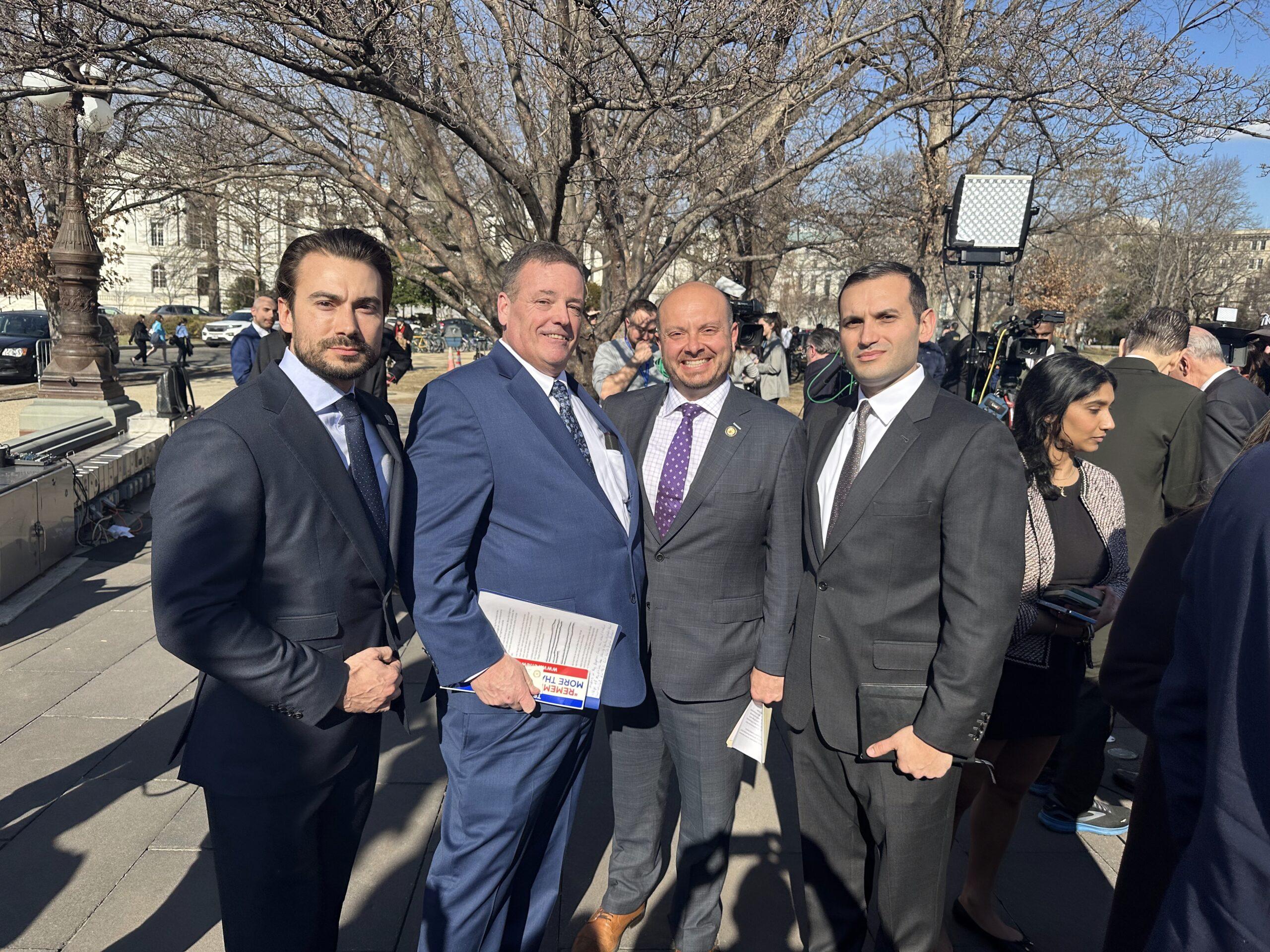
At Pitta & Baione LLP, our attorneys help individuals and families obtain the full compensation and support they deserve under federal 9/11 benefit programs. Partners Christopher and Matthew Baione accompanied Representative Andrew Garbarino and Thomas Hart, President of Citizens for the Extension of the James Zadroga Act and President of Local 94 International Union of Operating Engineers, at the bill’s introduction press conference on February 26, 2025. We work tirelessly to guide clients through every step of the process, advocating for their rights and ensuring that no eligible individual is left without the care and compensation they need. Contact us today to get started on a claim.